Company Operating System for Small Business: Turn Chats, Spreadsheets, and AI Tools Into Owned Work
A practical company operating system makes important work visible, owned, and reviewable - without forcing a small team into enterprise complexity.
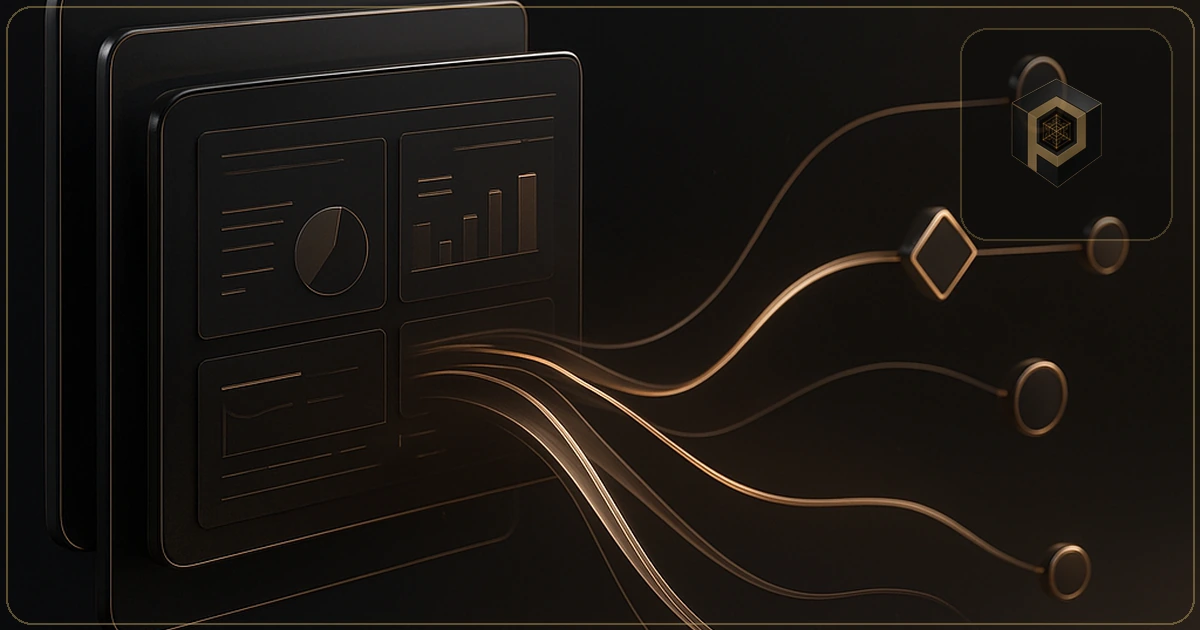
A company operating system for a small business is the shared way work becomes visible, owned, and reviewable. Every important inquiry, decision, commitment, task, and exception needs a record, an owner, and a next action. AI and automation should strengthen that system, not create another untracked channel.
That definition is deliberately simpler than an enterprise operating model. A small team does not need more ceremony. It needs fewer moments where a customer inquiry, promised callback, approval, or operational decision exists only in WhatsApp, a spreadsheet, an inbox, or one person's memory.
Why good people still lose important work
Most operational leakage is not caused by indifference. It happens because the business receives work through too many places:
- A prospect sends a WhatsApp message after a missed call.
- A team member promises a customer an update during a call.
- A spreadsheet records a lead but not the latest conversation.
- A founder makes a decision in a chat that never reaches the person doing the work.
- An AI tool drafts a reply, but nobody can see whether a human reviewed or sent it.
Each tool can be useful by itself. The failure is between them. A company operating system gives the team one practical answer to four questions: What happened? Who owns it? What happens next? What needs human attention now?
The minimum records a small business needs
Start with records, not software. A record is simply a shared place where the team can find the context needed to take the next responsible action.
| Record | Minimum information | Why it matters |
|---|---|---|
| Inquiry or customer | source, contact details, need, latest context | prevents a person from having to repeat their story |
| Opportunity or case | stage, value or urgency, decision needed | separates an active decision from a loose conversation |
| Task | owner, due date, next action | makes work accountable instead of assumed |
| Commitment | what was promised, to whom, by when | protects customer trust and internal follow-through |
| Exception | missing owner, stalled item, risky request, blocked handoff | shows what should not be left to automation or memory |
You do not need every field on day one. The rule is more important: if an item could affect a customer, revenue, delivery, or a decision, it should not be invisible after the conversation ends.
A company operating system is not just a dashboard, CRM, or automation
These tools overlap, but they do different jobs.
| Component | Primary job | What it cannot solve by itself |
|---|---|---|
| CRM | holds customer and pipeline information | unclear ownership or a missing follow-up standard |
| Dashboard | shows the state of the business | unreliable inputs and unowned exceptions |
| Automation | moves routine information or triggers tasks | sensitive judgment, ambiguous requests, or an undefined process |
| Company operating system | defines records, ownership, review cadence, and exception paths | it still needs simple tools and consistent team habits |
A CRM becomes more useful when every active record has a next action. A dashboard becomes more useful when its figures come from real operating records. Automation becomes safer when it knows what it may do, what it must escalate, and where the result is stored.
This is why buying another tool is rarely the first fix. Before adding software, map one workflow from the first customer signal to a completed outcome.
Start with one workflow, not a company-wide redesign
Choose a path that is both frequent and expensive to mishandle. For many small businesses, that is a new inquiry, missed call, appointment request, quote follow-up, or customer complaint.
Map the path in plain language:
- Trigger: What starts the workflow? For example, a WhatsApp inquiry, web form, missed call, or referral.
- Context: What information must travel with it so the next person can act without guessing?
- Owner: Who is responsible for the next action, even if someone else helps?
- Deadline: When does the first useful response or update need to happen?
- Human boundary: Which requests cannot be decided by automation - such as pricing, refunds, clinical advice, legal language, or sensitive complaints?
- Exception signal: What makes the item visible again if it has no owner, no next action, or no safe automated path?
The result should fit on one page. If the workflow cannot be explained clearly, automating it will only make the ambiguity faster.
Where AI helps - and where it should stop
AI is useful when it reduces routine handling without hiding responsibility. In a well-designed operating system, AI can:
- summarize a long customer conversation into the shared record;
- classify an inquiry and suggest the right queue;
- identify missing information before a handoff;
- draft a response for human review;
- flag overdue follow-ups or repeated customer contact;
- produce a daily exception list for an operations lead.
The boundary matters as much as the capability. AI should not independently make promises, set non-standard prices, resolve sensitive complaints, offer medical or legal guidance, or send high-stakes messages without an approved review path.
A practical pattern is: AI prepares, a named person decides, the system records the outcome. This preserves speed while leaving accountability where it belongs. The NIST AI Risk Management Framework is a useful reference for the broader principle that AI risks should be governed throughout design and use.
A 30-day rollout for founder-led teams
A lightweight rollout is more likely to survive than a broad transformation program.
Week 1: map the customer path
Pick one workflow and collect examples of where it breaks. Do not start with an ideal process. Start with the actual messages, call notes, and spreadsheets the team already uses. Identify the moment a request becomes owned work.
Week 2: define the records and review rule
Set the minimum fields for the inquiry, task, and exception record. Assign one accountable owner for each active item. Decide when the team reviews unowned, overdue, and blocked work - daily for high-volume customer operations, or weekly for lower-volume delivery work.
Week 3: add one bounded automation
Connect one source to one record. For example, create a lead from a web form, route a WhatsApp inquiry into a review queue, or generate a draft callback task after a missed call. Keep a human review point where the workflow crosses into judgment, commitment, or risk.
Week 4: inspect the exceptions
Review what the system surfaced: unassigned items, stalled handoffs, duplicate records, incomplete context, and messages that should have gone to a human earlier. Improve the workflow before adding another channel or automation.
How to know the system is working
Do not judge the system by the number of tools connected. Look for operational evidence:
- The team can see which inquiries have no owner.
- Every active customer item has a realistic next action.
- A person can continue a conversation without asking the customer to repeat everything.
- Founders spend less time chasing status across chats.
- Exceptions are visible early enough for someone to act.
- AI output is traceable to a workflow and a human decision boundary.
These are leading indicators of reliability. They are more useful than generic automation claims because they tell you whether customer-facing work is actually becoming easier to manage.
Can WhatsApp be part of the operating system?
Yes. WhatsApp can remain a customer channel, especially where customers already expect to use it. The risk starts when it becomes the only record of what was promised or who should respond next.
Keep the conversation where the customer prefers it, but capture the essential context, owner, and next action in a shared operating record. This approach is more practical than forcing customers into a new channel or asking staff to copy entire conversations manually.
For a focused example, see our guide to WhatsApp CRM integration for small businesses.
Frequently asked questions
What is a company operating system for a small business?
It is the shared set of records, ownership rules, review habits, and exception paths that make important work visible and actionable. It connects the day-to-day reality of chats, calls, spreadsheets, and tools to clear next actions.
Does a small business need a CRM or an operating system?
Usually both, but at different levels. A CRM can store customer and opportunity data. The operating system defines how that information becomes owned work, how follow-up is reviewed, and how exceptions are escalated.
What should AI automate first?
Start with low-risk, repetitive work that already has a clear owner and outcome: intake summaries, classification, routing suggestions, reminder creation, and missing-context checks. Keep sensitive decisions and commitments human-led.
Is a dashboard enough to run operations?
No. A dashboard can reveal a problem, but it cannot create the underlying ownership or next action. The operating records and review habits must come first.
A small business does not need to become more bureaucratic to run with more control. It needs one dependable way to turn customer signals and internal decisions into owned work. If your important work is still spread across chats, sheets, and personal memory, start with one workflow assessment and build the smallest system that makes the next action clear.
Recommended reads
What Should You Use AI Agents For? A Practical Founder’s Playbook
The best way to use AI agents is not to start with models or tools. Start with repeated work, low-value admin, research loops, and personal friction points you already understand, then give agents narrow jobs with clear review steps.
Semantic Memory Substrate: Why AI Agents Need Shared Company State
A company brain is not another app that remembers things. It is a shared semantic memory substrate that lets humans and AI agents work from the same facts, decisions, permissions, and history.