
Lead Response Time System for Small Businesses: Make Every Inquiry Ownable
A practical lead response time system for small businesses: capture every inquiry, assign ownership, set first-response targets, and keep the next follow-up visible.
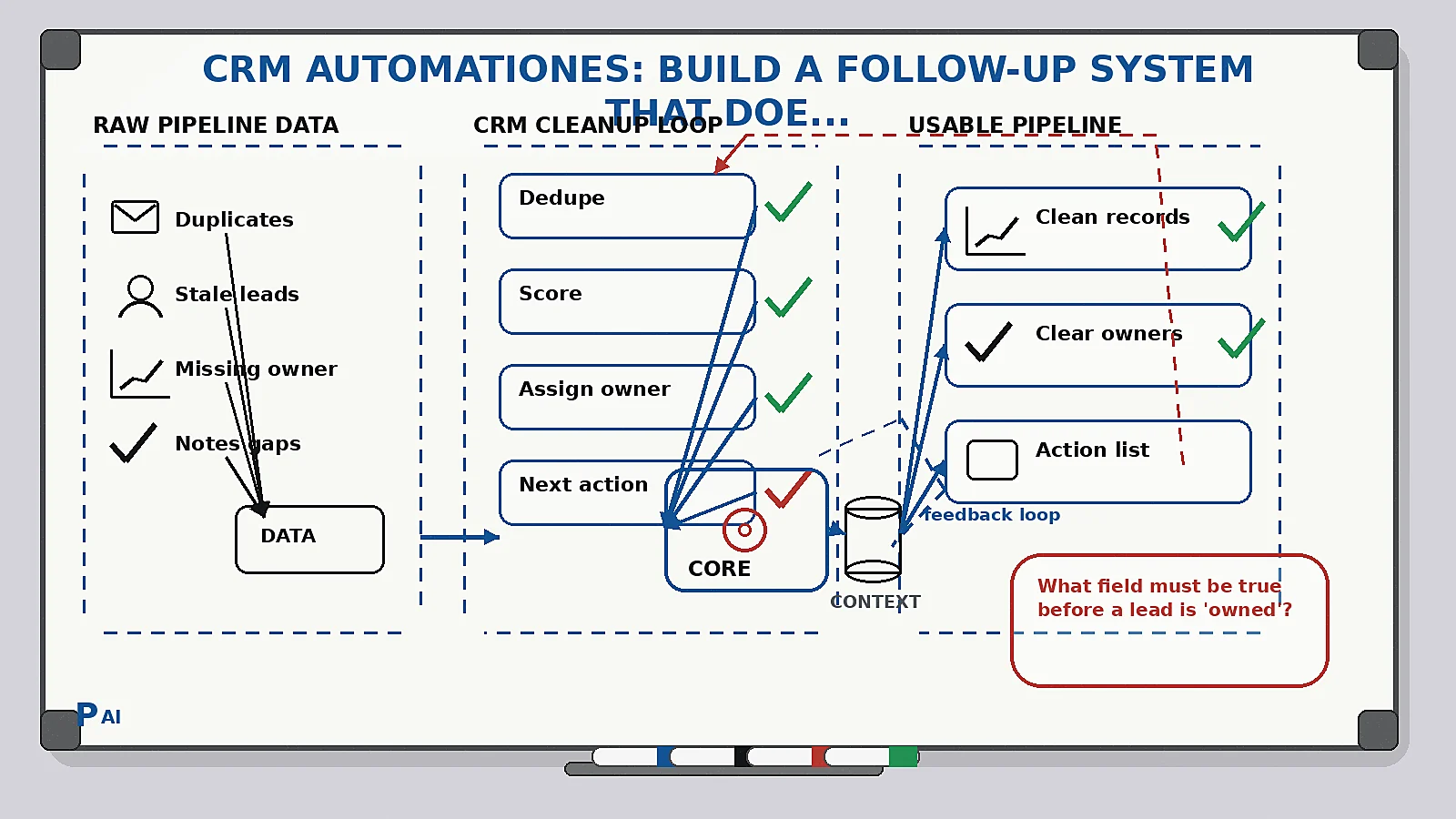
Quick answer
A lead response time system is the operating setup that decides what happens the moment someone inquires. It captures the lead in one place, names the person responsible for the first reply, sets a realistic response target, and makes the next follow-up visible if the conversation is not finished.
Speed matters, but speed without ownership is fragile. The useful goal is not "reply instantly to everything." It is "never lose an inquiry because nobody knew it arrived, who owned it, or what should happen next."
Why lead response breaks in small businesses
Most small businesses already care about responding quickly. The problem is usually the system around the message, not the team's intention.
A typical day looks like this:
- a WhatsApp message arrives while someone is with a client
- a form submission lands in an email inbox nobody checks every hour
- a missed call is written on a sticky note
- a website chat sits unanswered until evening
- a referral is mentioned verbally and never becomes a record
When the first reply depends on whoever happens to notice the channel, response time becomes inconsistent. Some leads get an excellent reply in five minutes. Others wait half a day. A few disappear completely.
A lead response time system turns that luck into a repeatable process.
What "good" lead response time actually means
Response time is not one number. It is a chain:
- Capture time — how quickly the inquiry becomes a visible record
- Assignment time — how quickly a named owner is responsible
- First-response time — how quickly the lead gets a useful reply
- Follow-up time — how quickly the next step happens if the lead does not convert immediately
A useful first response is not always a full sales conversation. It can be:
- confirmation that the inquiry was received
- one clarifying question
- available appointment or call options
- a clear next step and who will handle it
People forgive a short wait when the first reply is clear and competent. They do not forgive silence.
The lead response time system
1. Choose one source of truth
Pick one place where every new lead becomes a record. That can be a CRM, a shared lead board, or a lightweight operations table. The tool matters less than the rule:
If it is not in the system, it is not a managed lead.
Every channel should feed that record:
- website forms
- WhatsApp and Instagram DMs
- phone calls and missed calls
- email inquiries
- referrals and walk-ins
The minimum fields are enough to start:
| Field | Why it matters |
|---|---|
| Name and contact | So anyone can reply without hunting |
| Source channel | Shows where demand is coming from |
| Inquiry summary | Prevents the lead from having to repeat themselves |
| Owner | Makes first response accountable |
| First-response due | Creates a visible time target |
| Next action and due time | Keeps unfinished conversations alive |
| Status | Open, waiting on lead, qualified, closed, or not a fit |
2. Define first-response targets by lead type
Not every inquiry deserves the same urgency. A simple matrix is more sustainable than one impossible standard.
| Lead type | Example | First-response target | What "done" looks like |
|---|---|---|---|
| Hot inbound | "Can we start this week?" | Same working block | Owner replies and proposes a next step |
| Standard inquiry | Service question or quote request | Same business day | Owner answers and asks one qualification question |
| After-hours lead | Message outside working hours | First opening block next day | Auto-ack if useful, then human reply when the team is live |
| Incomplete lead | Missing contact or unclear request | Same day if contactable | Request the missing detail or mark unworkable |
Write targets the team can actually hit on a normal day. An ambitious target that is missed constantly is worse than a realistic target the business respects.
3. Assign ownership immediately
A lead without an owner is only a notification. Assignment should be automatic where possible:
- by channel
- by service type
- by geography
- by round-robin across sales owners
- to a shared queue with a primary on-duty owner
The assignment rule should answer one question in under five seconds: Who is responsible right now?
If the primary owner is unavailable, the system needs a backup owner or a shared queue. Vacations, site visits, and clinic hours should not silently break response time.
4. Separate acknowledgment from selling
Many teams delay the first reply because they want a perfect answer. That is usually the wrong trade.
A strong first response often has three parts:
- acknowledge the inquiry
- show you understood the request
- propose one clear next step
Example structure:
Thanks for reaching out about [service]. I can help with that. To point you in the right direction, could you share [one detail]? If it is easier, I can also offer a short call at [two options].
This protects response time without forcing a rushed quote or commitment.
5. Make unfinished follow-up visible
First response is only the start. Many leads go quiet after the first exchange. Without a visible next action, the conversation dies in the inbox.
Every open lead should have:
- the latest status
- the next owner action
- a due time
- a reason the lead is waiting, if applicable
Examples of next actions:
- send quote draft for review
- confirm site-visit slot
- wait for documents from the lead
- call back after 24 hours
- route to specialist and notify the lead
If the next action is not written down, the team is relying on memory again.
6. Create an exception path
Some inquiries should not stay in the normal speed lane:
- angry or sensitive cases
- high-value enterprise requests
- legal, medical, or compliance-sensitive questions
- pricing exceptions
- anything that requires founder judgment
Define what gets escalated, who receives it, and what the lead is told while the exception is handled. Fast response still matters here, but the content of the reply may be a careful holding message rather than a full answer.
A simple operating loop you can run this week
Use this loop for one channel first, not every channel at once.
- Capture every inquiry from that channel into one lead record within minutes.
- Assign an owner automatically or through a shared on-duty rule.
- Acknowledge with a useful first reply inside the target window.
- Qualify with the minimum questions needed to decide the next step.
- Schedule the next action before the conversation leaves the screen.
- Review unanswered or overdue leads once or twice a day.
A daily review can be short:
- Which leads missed the first-response target?
- Which open leads have no next action?
- Which owners are overloaded?
- Which channels create the most abandoned inquiries?
That review is where the system improves.
What to automate first
Automation helps after the manual loop is clear. Safe early automations include:
- creating a lead record from form, call, or WhatsApp events
- assigning an owner by rule
- sending an approved acknowledgment outside working hours
- creating a follow-up task if no reply is logged
- alerting a backup owner when a target is about to be missed
- summarizing the inquiry for the assigned person
Keep human-owned:
- promises on price, timeline, or scope
- sensitive or emotional conversations
- exceptions and escalations
- final qualification decisions when the stakes are high
The system should make people faster and more consistent. It should not hide judgment inside a black box.
Common failure patterns
Measuring only average response time
Averages hide the leads that waited too long. Track:
- median first-response time
- percentage answered inside target
- number of leads with no owner
- number of open leads with no next action
Celebrating speed while losing context
A 2-minute reply that asks the lead to repeat everything already shared is not a good system. Capture context once and carry it forward.
Letting every channel stay separate
If WhatsApp, email, forms, and calls each have their own private history, nobody can manage response time as a business process. Unify the record even if the customer still uses multiple channels.
Setting targets the team cannot staff
If the business cannot support 5-minute replies during peak hours, do not publish that standard internally. Design for the real working pattern, then improve capacity.
Practical example
Imagine a service business that receives leads from a website form and WhatsApp.
Before the system
- form leads go to a shared inbox
- WhatsApp lives on one phone
- nobody knows which inquiry is oldest
- follow-up depends on whoever remembers
After the system
- both channels create a lead card with source, summary, and timestamp
- an on-duty owner is assigned immediately
- the first-response target is same business day for standard inquiries
- after-hours messages get an approved acknowledgment and a morning queue
- every open lead has a next action before the owner moves on
- a short end-of-day review catches anything still waiting
The team may not become instantly faster at every moment of the day. They become reliable. Reliability is what converts more inquiries over time.
Implementation checklist
- One shared lead record for every inquiry
- Required fields: contact, source, summary, owner, first-response due, next action
- Response targets by lead type
- Assignment rule and backup owner
- First-response template that acknowledges, clarifies, and proposes a next step
- Daily review of overdue and ownerless leads
- Exception path for sensitive or high-stakes cases
- Only low-risk automation after the manual loop works
FAQ
What is a good lead response time for a small business?
A good target is one your team can hit consistently during normal working hours. Many service businesses aim for a same-day first response on standard inquiries and a faster target for clearly hot inbound requests. The better question is whether every lead is captured, owned, and answered inside a standard the team respects.
Should every lead get an instant auto-reply?
An auto-reply can help after hours or during peak load, but it should not replace a useful human first response. If you use automation, keep the message honest, set expectations, and make sure a person still owns the follow-through.
How is a lead response time system different from a CRM?
A CRM is a tool. A lead response time system is the operating design: capture rules, ownership, targets, follow-up discipline, exceptions, and review. A CRM helps only when those rules are clear.
What should we track each week?
Track the percentage of leads answered inside target, the number of leads with no owner, the number of open leads missing a next action, and the channels that create the most delayed responses. Those measures show whether the system is working.
Where should a small business start?
Start with the channel that creates the most missed or delayed inquiries. Make capture, ownership, first response, and next-action visibility work there before expanding to every channel.
Practical takeaway
Lead response time improves when the business stops treating inquiries as messages and starts treating them as owned work. Capture every lead, assign a responsible person, set a realistic first-response target, and keep the next action visible until the conversation is complete.
If you want help turning lead capture, routing, and follow-up into a practical operating system for your team, explore how Pratap AI designs workflow automation around ownership, exceptions, and measurable next actions.
Recommended reads
What Should You Use AI Agents For? A Practical Founder’s Playbook
The best way to use AI agents is not to start with models or tools. Start with repeated work, low-value admin, research loops, and personal friction points you already understand, then give agents narrow jobs with clear review steps.
Semantic Memory Substrate: Why AI Agents Need Shared Company State
A company brain is not another app that remembers things. It is a shared semantic memory substrate that lets humans and AI agents work from the same facts, decisions, permissions, and history.