Voice and WhatsApp Follow-Up Automation by Industry: What to Automate First
Voice and WhatsApp follow-up automation works best when it captures intent, asks the minimum safe questions, assigns an owner, creates the next reminder, and escalates sensitive or high-value cases to a human.
Most businesses do not lose good leads because the first call-to-action is weak. They lose them in the minutes after a customer shows intent.
A buyer taps “Call Now.” A patient asks for an appointment. A shopper sends a WhatsApp message. A hotel guest asks about availability. A property buyer asks for a site visit.
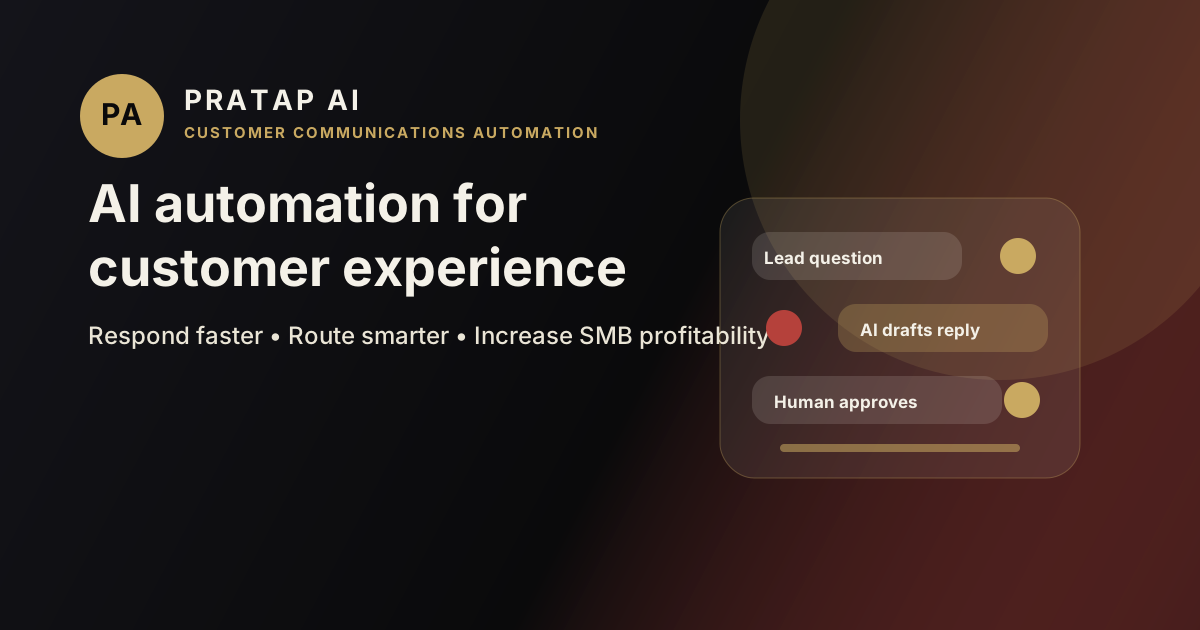
At that moment, the business needs a simple operating system: capture the reason, ask the right questions, assign an owner, create the next reminder, and escalate anything sensitive or high-value to a human.
That is where voice and WhatsApp follow-up automation is useful. Not as a generic chatbot. Not as a replacement for sales, support, front desk, or relationship-led service. The practical first version is a reliability layer for the conversations that already create revenue.
Quick answer
Voice and WhatsApp follow-up automation helps small businesses respond faster after a customer raises their hand. The safest first workflow is: capture the inquiry, qualify the customer with a few approved questions, summarize the context, route it to the right person, create a follow-up reminder, and escalate exceptions to a human.
The best starting point depends on the industry. Real estate teams need site-visit and budget follow-up. D2C brands need order, availability, and support triage. Clinics and hospitality teams need appointment or booking coordination with clear human handoff. Local service businesses need missed-call recovery and quote-intake workflows.
Why follow-up breaks after the call-to-action
A lead form, WhatsApp button, ad campaign, or call button is only the first step. The real operational test begins after the customer takes action.
Common failure points include:
- A missed call with no callback owner.
- A WhatsApp inquiry that is read but not assigned.
- Lead context trapped inside one person’s phone.
- No reminder after the first reply.
- No escalation rule for urgent or sensitive cases.
- No dashboard view for the founder or manager.
None of these problems are solved by “AI everywhere.” They are solved by workflow design. AI becomes useful when it supports that workflow with faster capture, structured summaries, routing, and reminders.
The base workflow every industry can start with
Before choosing tools, define the minimum safe follow-up workflow.
- Capture the inquiry. Record the customer name, channel, reason, source, and time.
- Ask only the necessary questions. Keep qualification short and approved in advance.
- Summarize the context. Turn the conversation into a clean note the team can act on.
- Assign an owner. Route the lead or request to the right person based on intent, location, urgency, or value.
- Create the next follow-up. Add a reminder instead of relying on memory.
- Escalate exceptions. Send sensitive, high-value, angry, medical, legal, financial, or unclear cases to a human.
- Show status. Give the founder or manager visibility into open conversations, missed follow-ups, and stuck items.
This workflow is simple enough to implement, but strong enough to reduce many avoidable lead leaks.
Real estate: automate site-visit follow-up, not the relationship
Real estate inquiries usually arrive with partial information. A buyer may ask about a project, price range, location, possession timeline, or site visit slot. The sales team still owns persuasion and trust, but automation can protect the handoff.
A practical real estate workflow captures:
- Project or property interest.
- Budget range.
- Preferred location.
- Site visit timing.
- Current buying stage.
- Call outcome.
- Assigned sales owner.
- Next reminder.
The automation should not negotiate pricing, make promises, or invent project details. It should collect context and make sure the right person follows up quickly.
For real estate teams, the best first metric is not “AI conversations completed.” It is whether fewer site-visit leads disappear after the first call or WhatsApp message.
Ecommerce and D2C: automate structured support and repeat follow-up
For WhatsApp-first D2C brands, the useful automation is usually not a broad chatbot. It is structured follow-up around repeatable customer questions.
Good starting workflows include:
- Product availability checks.
- Order confirmation.
- Delivery or status updates.
- Payment concern routing.
- Return or replacement intake.
- Abandoned conversation reminders.
- Repeat-buyer follow-up.
The system should keep conversations personal while reducing manual back-and-forth. A customer should not feel trapped in automation. They should feel that the brand responds consistently and knows when to bring in a human.
A strong rule: automate the administrative path, not the customer’s trust.
Clinics, salons, and hospitality: automate coordination with strict boundaries
Clinics, salons, hotels, restaurants, and hospitality operators often receive time-sensitive inquiries. The work is coordination-heavy: booking, rescheduling, confirmation, location questions, reminders, and follow-up.
Good automation candidates include:
- Appointment or booking intake.
- Preferred time and branch/location capture.
- Confirmation messages.
- Reminder messages.
- Reschedule requests.
- Basic FAQs.
- Human escalation for sensitive situations.
For clinics especially, the boundary matters. Automation can support appointment access and administrative coordination. It should not provide clinical judgment, diagnosis, treatment advice, or anything that requires professional review.
For hospitality, automation can reduce missed coordination, but guest care still needs human judgment when the request is unusual, high-value, or emotionally sensitive.
Local service businesses: recover missed calls and qualify requests
Local service teams often depend on phone calls, WhatsApp messages, and quick quotes. A missed call can be a lost job.
A practical first workflow can:
- Detect a missed call.
- Send a polite callback or WhatsApp message.
- Ask what service is needed.
- Capture location and urgency.
- Route the request to the right technician or owner.
- Create a follow-up reminder.
- Show the founder which inquiries remain unresolved.
This is often more valuable than a complex chatbot because the business problem is not conversation volume alone. The problem is response reliability.
What should stay human
Automation becomes risky when it crosses into promises, judgment, or emotionally sensitive work. Keep humans in charge of:
- Pricing negotiation.
- Complaints and escalations.
- Medical, legal, financial, or compliance-sensitive cases.
- High-value sales conversations.
- Exceptions the system has not seen before.
- Final approval on outbound offers or commitments.
This is not a limitation. It is the design principle that makes automation practical for real businesses.
Implementation checklist
Use this checklist before building the workflow:
- Which channels create the most valuable inquiries: calls, WhatsApp, forms, ads, or referrals?
- What are the top five reasons customers contact you?
- What questions are safe for automation to ask?
- Who should own each type of inquiry?
- What response requires immediate escalation?
- What reminder should be created after the first reply?
- What should the founder or manager see daily?
- What claims, promises, or advice should automation never make?
If these answers are unclear, start with a workflow map before choosing tools.
FAQ
What is voice and WhatsApp follow-up automation?
Voice and WhatsApp follow-up automation is a workflow that captures customer inquiries from calls or WhatsApp, asks approved qualification questions, summarizes the context, assigns an owner, creates reminders, and escalates important cases to a human.
Should small businesses start with a chatbot?
Not always. Many small businesses should start with missed-call recovery, WhatsApp inquiry capture, routing, and follow-up reminders before building a full chatbot. These workflows are usually easier to control and closer to revenue.
Can AI handle all customer follow-up automatically?
It should not handle everything automatically. Routine intake, reminders, and status updates can be automated, but pricing, complaints, sensitive advice, and high-value decisions should stay human-owned.
Which industries benefit most from voice and WhatsApp automation?
Real estate, ecommerce, clinics, hospitality, local services, education, and other inquiry-heavy businesses can benefit when they depend on fast response and consistent follow-up.
How do you avoid making automation sound robotic?
Use short approved messages, ask fewer questions, summarize clearly, and hand off to a human at the right moment. The goal is not to make AI sound clever. The goal is to make follow-up reliable.
Practical takeaway
The best first voice and WhatsApp automation project is not a fully autonomous sales or support agent. It is a clean follow-up system for the moments after a customer shows intent.
Start with one industry-specific workflow. Capture the inquiry. Ask the minimum safe questions. Route it to the right person. Create the next reminder. Escalate anything sensitive. Then give the founder visibility into what happened.
That is enough to make customer communication more reliable without losing the human judgment that still matters.
At Pratap AI, we help founder-led teams map and build these practical communication workflows across voice, WhatsApp, CRM, and operating dashboards.